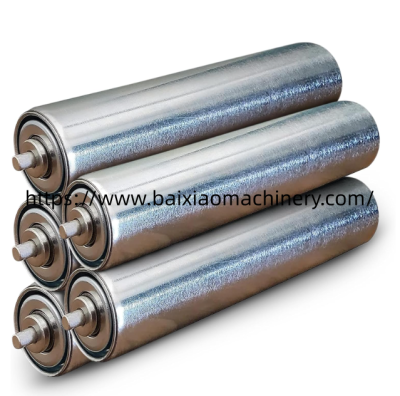
Which Materials Are Used For Baixiao Conveyor Rollers In Differ
-
Conveyor Rollers are widely used in modern logistics, manufacturing, warehousing, and assembly line systems where stable material movement and continuous production flow are required. In different industries, working environments vary significantly, which means material selection becomes an essential factor affecting performance, durability, and maintenance frequency. Choosing suitable materials helps ensure that equipment operates reliably under different loads and environmental conditions.
One of the most commonly used materials in industrial systems is carbon steel. Steel-based components are often selected for heavy-duty applications where strength and load capacity are critical. These systems are suitable for transporting large products, raw materials, and industrial goods across production facilities. Steel provides structural stability and performs well in demanding environments where continuous operation is required.
Stainless steel is widely used in environments where corrosion resistance and hygiene standards are important. Industries such as food processing, pharmaceutical production, and chemical handling often require materials that can resist moisture, cleaning agents, and environmental exposure. Stainless steel helps maintain stable operation while supporting cleanliness and long-term usability in controlled environments.
Aluminum is another common material used in many production systems. Its lightweight nature makes it suitable for applications where reducing equipment weight is beneficial. Aluminum is often used in packaging lines, sorting systems, and flexible manufacturing setups. It provides a balance between structural strength and ease of installation, making it a practical choice for adaptable production environments.
Polymer-based materials are used in light-duty systems where noise reduction, smooth movement, and cost efficiency are important considerations. These materials are commonly applied in packaging, electronic assembly, and small-scale material handling systems. Plastic surfaces help reduce friction and improve operational smoothness in non-heavy load conditions.
In some applications, rubber-coated surfaces are used to improve grip and reduce slipping during material transfer. This type of surface treatment is useful in systems that require stable positioning or controlled movement between different production stages. It helps maintain consistent flow and reduces product shifting during transport.
Material selection is influenced by several factors, including load requirements, environmental conditions, maintenance expectations, and system design. Temperature, humidity, and operational frequency all play a role in determining which material is most suitable for a specific application. Each industry may require a different balance between durability, efficiency, and operational cost.
Modern industrial systems also consider long-term maintenance efficiency when selecting materials. Components that require less frequent maintenance can help reduce downtime and improve overall production stability. This is particularly important in automated systems where continuous operation is required.
Baixiao focuses on providing industrial material handling solutions designed for practical production requirements and adaptable working environments. By combining structural engineering with appropriate material selection, systems can achieve more stable and consistent operational performance across different industries.
As industrial automation continues to expand, demand for efficient material handling systems continues to grow. Equipment design and material technology will continue to play important roles in supporting productivity, efficiency, and system reliability across various sectors.
For more information about industrial equipment solutions, please visit https://www.baixiaomachinery.com/ .